
From sourcing quality ingredients to keeping your staff trained and your customers happy, the list of responsibilities never seems to shrink. One item that should always sit near the top of that list is fire safety. A commercial kitchen is one of the most fire-prone environments in any industry, and without the right kitchen fire suppression services in place, a single incident can erase years of hard work in a matter of minutes.
This guide is designed to help business owners in Dalton, GA understand what commercial kitchen fire suppression systems are, why they matter, and how to stay compliant with the standards that protect your staff, your customers, and your investment.
Why Commercial Kitchens Face Unique Fire Risks
Commercial kitchens operate at a level of intensity that residential cooking simply cannot match. High-output burners, deep fryers running at extreme temperatures, and heavy-duty grills all produce enormous amounts of heat. Add to that the accumulation of grease on cooking surfaces, exhaust hoods, and ductwork, and you have a combination that fire safety professionals consider among the most hazardous in any building type.
Cooking equipment is consistently ranked as the leading cause of fires in restaurants and food service facilities across the country. Grease fires are particularly dangerous because they spread rapidly, resist water-based suppression methods, and can reignite if not properly extinguished. A standard sprinkler system is not designed to handle this type of fire, which is exactly why specialized kitchen fire suppression services are so critical for commercial operations.
In Dalton, GA, local fire codes align with national standards to ensure that commercial kitchens are equipped with suppression systems designed for high-heat, grease-heavy environments. Understanding these requirements is not just a legal obligation; it is a fundamental part of responsible business ownership.
Understanding UL300 and NFPA Compliance
Two of the most important benchmarks in commercial kitchen fire safety are UL 300 certification and compliance with the National Fire Protection Association (NFPA) standards, particularly NFPA 96. If you are operating a commercial kitchen in Dalton, GA, familiarity with these standards is essential.
UL 300 is a testing standard established by Underwriters Laboratories that applies specifically to fire extinguishing systems used in commercial cooking equipment. Systems that meet UL 300 certification have been rigorously tested to ensure they can effectively suppress fires involving modern cooking oils and fats, which burn at higher temperatures than the animal fats that older systems were originally designed to handle. If your suppression system was installed more than a decade ago and has not been updated, there is a strong chance it no longer meets current UL 300 requirements.
NFPA 96 is the standard for ventilation control and fire protection of commercial cooking operations. It covers everything from the design and installation of exhaust hoods to the proper maintenance of suppression systems and the required frequency of inspections. NFPA 96 mandates that suppression systems be inspected at least every six months by a certified technician. Failure to comply with this schedule can result in fines, failed inspections, increased insurance premiums, or, in a worst-case scenario, a suppression system that fails at the moment it is needed most.
Staying current with UL300 and NFPA compliance is not just about passing inspections. It is about having a system you can genuinely rely on to protect your people and your property.
Key Components of a Commercial Kitchen Suppression System
A well-designed commercial kitchen fire suppression system is made up of several interconnected components, each serving a specific role in detecting and controlling a fire event. Understanding these components helps business owners ask the right questions when working with kitchen fire suppression services providers in the Dalton area.
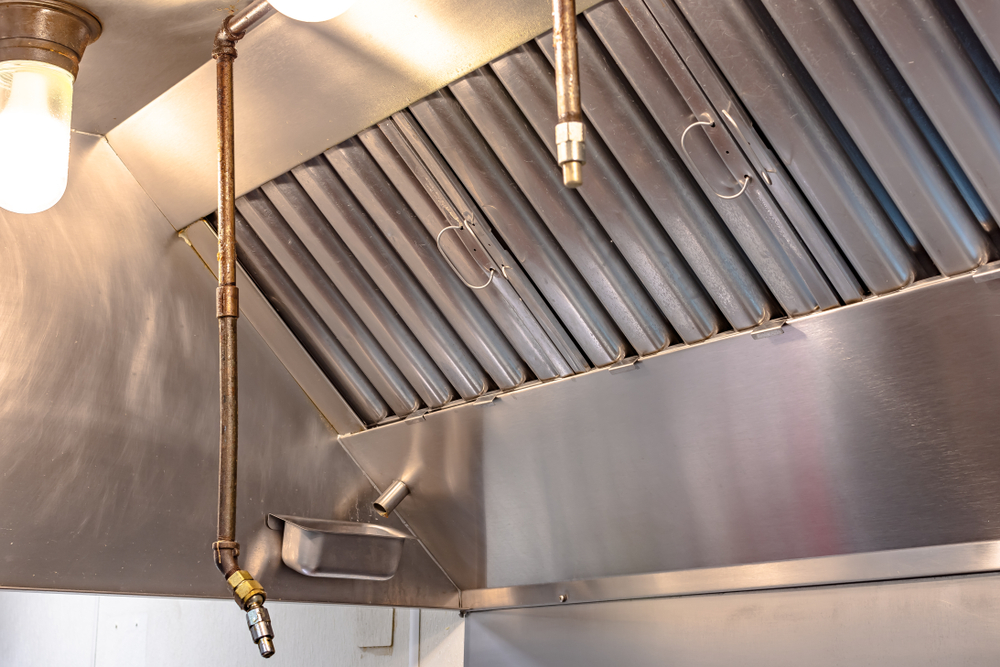
The detection system is the first line of response. Fusible links or heat detectors are positioned above cooking equipment and within the exhaust hood. When temperatures exceed a set threshold, these devices trigger the suppression system automatically. Speed matters enormously in a kitchen fire, and automatic detection removes the delay that comes with waiting for a person to manually activate the system.
The agent storage tank holds the wet chemical suppression agent. Modern systems use a wet chemical formula that reacts with hot cooking oils and fats to create a foam-like layer that smothers the fire and prevents reignition. This process, known as saponification, is highly effective against the grease fires most common in commercial kitchens.
Nozzles are strategically positioned above fryers, ranges, grills, and other cooking surfaces to ensure full coverage when the agent is discharged. Proper nozzle placement is a critical element of system design and must follow manufacturer specifications as well as UL 300 and NFPA 96 guidelines.
Finally, a fuel shutoff mechanism is integrated into the system to automatically cut off the gas or electric supply to cooking equipment when the suppression system activates. This step is essential because continuing to supply fuel or heat during a fire can undermine suppression efforts and allow the fire to reignite.
What to Expect from Professional Kitchen Fire Suppression Services
Choosing the right partner for your kitchen fire suppression services needs in Dalton, GA involves more than just finding the lowest quote. The company you work with should be licensed, knowledgeable about current compliance requirements, and experienced in the design, installation, and maintenance of systems for commercial cooking environments.
A qualified provider will begin with a thorough assessment of your kitchen layout, your cooking equipment, and your current system if one is already in place. From there, they will design or recommend a suppression solution that provides complete coverage of all cooking surfaces and meets all applicable UL300 and NFPA compliance requirements.
Installation should always be performed by certified technicians following manufacturer specifications and local fire code requirements. After installation, your provider should walk you through the system, explain how it works, and schedule your first semi-annual inspection.
Ongoing maintenance is where many business owners fall short. Inspections every six months are not optional under NFPA 96; they are mandatory. During each inspection, a technician will check the agent supply, inspect nozzles and detection components, test the fuel shutoff, and verify that the system is ready to perform in an emergency. Any issues identified should be addressed promptly to keep the system in compliance and in full working order.
Many kitchen fire suppression services providers in Dalton also offer hood cleaning services, which is closely related to suppression system maintenance. Grease buildup in hoods and ducts is a primary fire risk, and regular cleaning is required under NFPA 96 as well.
Protecting Your Business Starts Today
Commercial kitchen fire safety in Dalton, GA is not something to approach with a “we’ll deal with it if something happens” mindset. The cost of a fire, including property damage, lost inventory, business interruption, liability exposure, and potential harm to employees and customers, far exceeds the cost of a properly maintained suppression system and a consistent compliance schedule.
Whether you are opening a new restaurant, upgrading an aging system, or simply trying to bring your existing setup into line with UL300 and NFPA compliance standards, the right time to act is now. Local fire suppression professionals who understand Dalton’s codes and the specific demands of commercial cooking environments are your best resource.
Conclusion
A commercial kitchen suppression system is one of the most important investments you can make in the long-term security of your business. By working with qualified kitchen fire suppression services providers, staying current with commercial kitchen fire safety requirements in Dalton, GA, and maintaining strict UL300 and NFPA compliance, you give your operation the best possible foundation for a safe and successful future.
Need a Fire Protection Company Near You?
Carpet Capital Fire Protection, Inc. is your fire protection specialist in Dalton and the surrounding areas in Northern Georgia. With over 40 years of experience, we always go above and beyond our customers’ requests and expectations in order to ensure all of their fire protection needs. The founder of Carpet Capital Fire Protection Inc. wanted to create a fire protection company in the area that guaranteed a better quality of work, better prices, and a better overall customer relationship. We will help to ensure that your property meets local or state fire codes, insurance fire codes, and municipality-related fire codes. Contact us today to learn more about what we can do for you!