
When property owners think about protecting their buildings, they often focus on the visible elements: smoke detectors on the ceiling, exit signs above the doors, and fire extinguishers mounted on the walls. But the systems working quietly behind the scenes, including underground piping, pump assemblies, and suppression networks, are just as critical to keeping people safe. Whether you manage a commercial kitchen in Georgia or oversee a multi-story office building, understanding your full range of life safety systems is the first step toward keeping them in peak condition.
From backflow prevention services in Dalton to comprehensive fire protection across the region, property owners who take a proactive approach to these systems are the ones who avoid costly failures, failed inspections, and worst of all, preventable tragedies.
Why Backflow Prevention Is More Important Than You Think
Most people have never given much thought to backflow prevention, and that is exactly the problem. Backflow occurs when contaminated water reverses direction in a plumbing system and flows back into the clean water supply. This can happen during pressure drops caused by water main breaks, firefighting activity, or heavy demand on the local supply.
In commercial and industrial settings, the consequences can be severe. Chemicals, waste, and other contaminants can enter drinking water lines, putting employees, customers, and residents at serious risk. Backflow prevention services in Dalton are designed to stop this from happening by installing and maintaining assemblies that act as one-way gates in your water system.
These devices require regular testing by a certified professional. Many municipalities and water authorities require annual inspections to confirm that backflow preventers are functioning properly. Skipping this maintenance does not just mean risking a failed inspection; it means risking the integrity of your entire water supply. For businesses that use chemicals, fertilizers, or industrial fluids anywhere near their water lines, a properly functioning backflow preventer is genuinely a life safety device.
If you have an irrigation system, a boiler, or any kind of process water connection on your property, there is almost certainly a backflow preventer in your system. The question is whether it has been inspected lately and whether it is doing its job.
Kitchen Fire Suppression Systems: The Hidden Guardian of Your Commercial Kitchen
Commercial kitchens are among the highest fire-risk environments in any building. Hot grease, open flames, and continuous cooking create conditions where a fire can ignite and spread in seconds. That is why kitchen fire suppression systems are not optional in Georgia or anywhere else in the country; they are required by code and essential to protecting lives and property.
Kitchen fire suppression systems in GA work by automatically detecting heat or flame above a cooking appliance and releasing a suppressing agent, typically a wet chemical, directly onto the source of the fire. The system also shuts off the gas supply to the appliances, cutting off the fuel that feeds the fire. All of this happens faster than any person could respond manually.
However, having a system installed is only part of the equation. These systems must be inspected and serviced every six months under NFPA 96 standards. Nozzles can clog, chemical tanks can depressurize, and mechanical components can wear out over time. A suppression system that has not been serviced is a system you cannot trust when it matters most.
If you operate a restaurant, cafeteria, food truck commissary, or any facility with a commercial cooking line in Georgia, partnering with a qualified fire protection company to maintain your kitchen suppression system is not just smart, it is the law.
Fire Pump Installation and Repair: The Engine Behind Your Sprinkler System
Sprinkler systems are one of the most effective fire suppression tools available, but they are only as good as the water pressure behind them. In taller buildings or facilities with high water demand, municipal water pressure alone is not enough to push water through an entire sprinkler network at the required flow rate. That is where fire pumps come in.
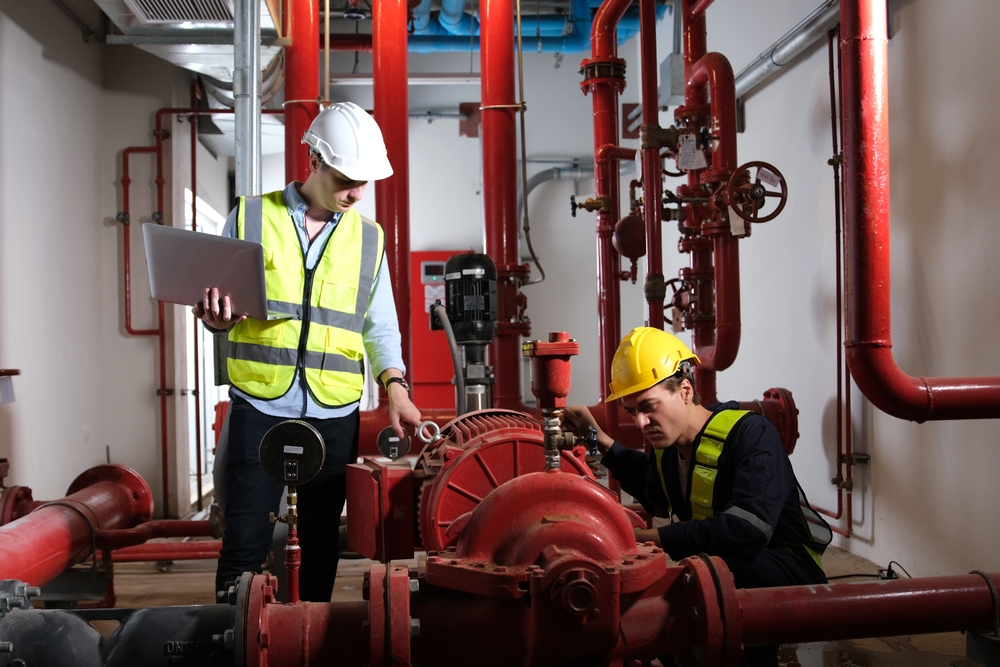
Fire pump installation and repair is a specialized discipline that requires a thorough understanding of hydraulics, electrical systems, and NFPA standards, particularly NFPA 20, which governs the installation of stationary fire pumps. A properly sized and installed fire pump ensures that every sprinkler head in a building receives adequate water pressure during an emergency, regardless of the building’s height or layout.
Fire pumps require regular testing and maintenance. Annual flow tests, weekly churn tests, and periodic inspections by qualified technicians are all part of keeping a fire pump in reliable condition. When a fire pump fails during an emergency, the consequences can be catastrophic. Buildings that have experienced fire pump failures during active fires have suffered far greater damage than they would have with a properly functioning system.
Whether you are installing a new fire pump for a construction project or repairing an aging unit in an existing facility, working with experienced technicians who understand both the mechanical and code compliance side of fire pump systems is essential.
Emergency Exit Lighting Maintenance: The Detail That Saves Lives in the Dark
In a fire or power failure, visibility drops to near zero within seconds. Smoke fills corridors, panic sets in, and people lose their sense of direction. Emergency exit lighting is specifically designed for this moment. It provides illuminated pathways and clearly marked exits so that occupants can evacuate safely even in complete darkness.
Emergency exit lighting maintenance is a requirement under NFPA 101, the Life Safety Code, as well as OSHA standards for workplace safety. Exit signs must remain illuminated at all times, and emergency lighting units must be capable of operating on battery backup for a minimum of 90 minutes during a power outage.
Regular maintenance includes monthly 30-second tests to verify battery function, annual 90-minute full-discharge tests, and physical inspections to ensure that lenses are clean, bulbs are working, and units are properly aimed at egress paths. Replacing a failed exit light battery before an inspection might seem like a minor task, but during an actual emergency, that battery is the difference between an orderly evacuation and chaos.
Many building owners overlook emergency exit lighting maintenance until they receive a violation notice from the fire marshal. Do not wait for that moment. A qualified fire protection company can establish a routine maintenance schedule that keeps your lighting systems compliant and reliable year-round.
Choosing Fire Protection Specialists in Chatsworth, GA
Across the region, property owners and facility managers are recognizing the value of working with dedicated fire protection specialists rather than relying on general contractors or in-house maintenance staff for life safety systems. Fire protection specialists in Chatsworth, GA, bring focused expertise that general tradespeople simply cannot match when it comes to code compliance, system design, and the nuances of life safety equipment.
A qualified fire protection company will assess your entire system portfolio, from sprinklers and fire pumps to suppression systems and exit lighting, and develop a maintenance plan that keeps everything working in coordination. They understand how local fire marshals and AHJs (authorities having jurisdiction) interpret and enforce codes in Georgia, and they can help you navigate inspections, permitting, and deficiency corrections without the stress of going it alone.
When selecting a fire protection partner, look for companies with NICET-certified technicians, demonstrated experience across system types, and a track record of responsive service. Life safety systems do not fail on a convenient schedule, and your service provider should be able to respond when it counts.
Conclusion
Protecting your property means looking beyond the obvious and paying attention to the systems that quietly do the heavy lifting every single day. Backflow preventers, kitchen suppression systems, fire pumps, and emergency lighting are not glamorous, but they are irreplaceable. Partnering with knowledgeable fire protection professionals ensures that when an emergency arrives, every system on your property is ready to perform exactly as designed.
Need a Fire Protection Company Near You?
Carpet Capital Fire Protection, Inc. is your fire protection specialist in Dalton and the surrounding areas in Northern Georgia. With over 40 years of experience, we always go above and beyond our customers’ requests and expectations in order to ensure all of their fire protection needs. The founder of Carpet Capital Fire Protection Inc. wanted to create a fire protection company in the area that guaranteed a better quality of work, better prices, and a better overall customer relationship. We will help to ensure that your property meets local or state fire codes, insurance fire codes, and municipality-related fire codes. Contact us today to learn more about what we can do for you!